
 0
0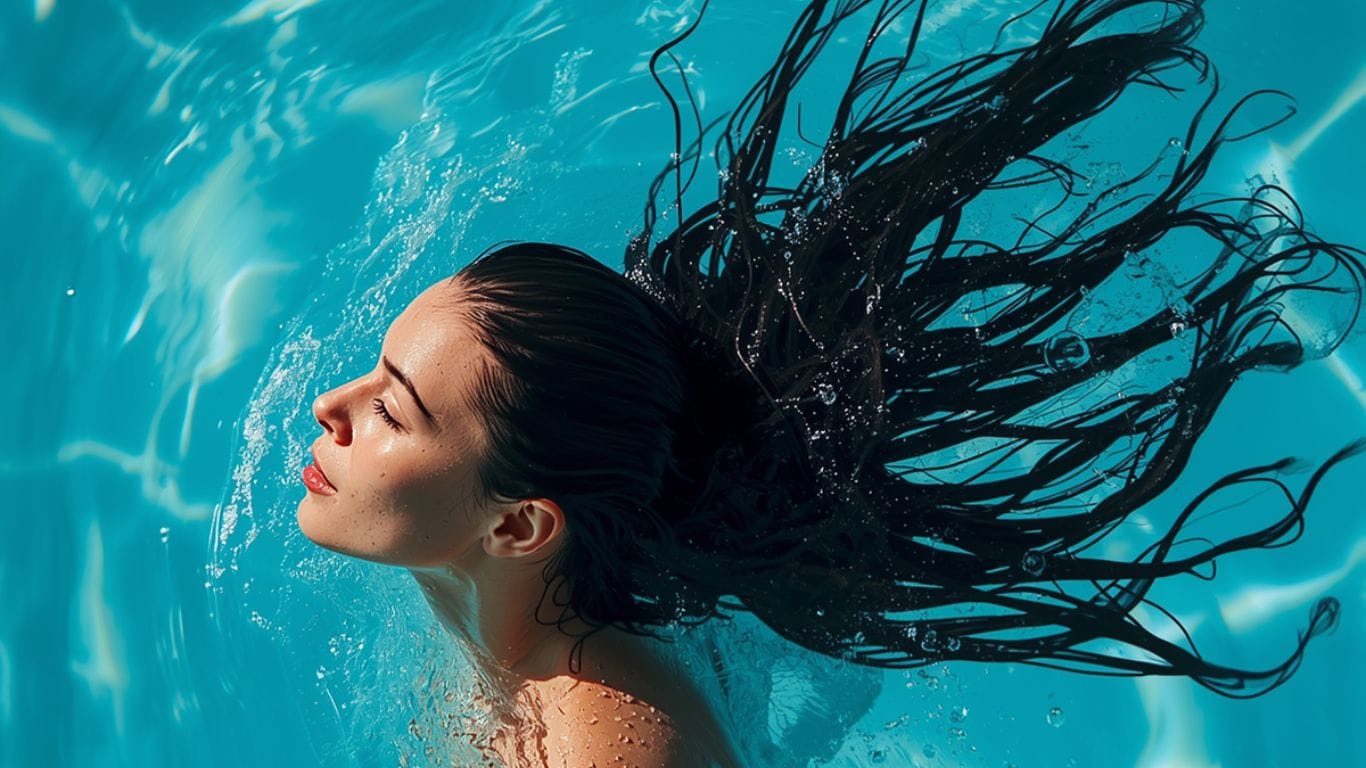
You push off the wall, the water rushes over you, and for the next hour, the pool is your sanctuary. 🌊 But when you towel off and catch your reflection, your hair tells a different story — dull, dry, faintly crunchy, and maybe even a little fragile. Sound familiar? If you swim regularly, whether for sport, fitness, or pure joy, your hair and scalp are quietly absorbing a chemical assault with every single lap. The culprit? Chlorine. At Ahimsa, we believe your athletic dedication and the health of your hair should never be in conflict. This guide breaks down exactly what chlorine does to your scalp and hair — and how a mindful, natural routine can protect both without making you choose between the pool and your most vibrant hair. 🌿
The Science of Chlorine: What’s Actually Happening to Your Hair 🔬
To understand how to protect your hair, you first need to know what you’re protecting it from. Chlorine is an essential disinfectant in pools — but it does its job by being a powerful oxidizing agent, and it doesn’t stop oxidizing when it reaches your scalp.
1. It Strips Your Scalp’s Natural Oil Barrier 🛡️
Sebum — the natural oil produced by your scalp’s sebaceous glands — is your hair’s built-in conditioner and first line of defense. Chlorine breaks down sebum on contact, leaving your scalp exposed, dry, and vulnerable to irritants and moisture loss. The result? That tight, itchy feeling on your scalp after a swim is not just water. It’s your skin’s barrier crying out for help.
2. It Disrupts Your Scalp’s pH Balance ⚖️
Your scalp thrives at a naturally acidic pH of around 4.5–5.5. Pool water typically sits at pH 7.2–7.8 — significantly more alkaline. According to research published in the Journal of Clinical and Aesthetic Dermatology, maintaining an ideal scalp pH supports a diverse microbiome and promotes a healthy scalp. When that pH is repeatedly shifted by pool water, your acid mantle — the thin protective film that guards against bacteria and moisture loss — is weakened, leaving your scalp prone to dryness, inflammation, and microbial imbalance.
3. It Opens and Damages Your Hair Cuticle 💧
The cuticle is the outer protective layer of each hair strand — a series of overlapping scales, like shingles on a roof. Chlorine lifts and roughens these scales, increasing your hair’s porosity and exposing the inner cortex to friction and further oxidative damage. The visible results are frizz, tangling, dullness, and over time, split ends and breakage.
4. It Degrades Keratin — Your Hair’s Structural Protein 💪
Electron microscopy studies show that chlorine degrades keratin, particularly the cysteine-rich bonds that give hair its tensile strength and elasticity. For swimmers who train regularly, this cumulative protein loss is what transforms healthy hair into strands that break with minimal tension.
5. It Can Affect Your Hair’s Color 🎨
If you’re color-treated, chlorine is your dye’s worst enemy — accelerating fade and altering tone. And if you’re a natural blonde or have lighter hair? Chlorine can react with trace copper and metals in pool water, creating oxidative reactions that produce an unwanted greenish tint. This isn’t a myth — it’s chemistry. 🟢
The Pre-Swim Protection Ritual 🌊
The single most powerful thing you can do for your hair happens before you ever enter the water. Here’s the Ahimsa approach to pre-swim protection:
Step 1: Saturate Your Hair with Clean Water 💦
Your hair is like a sponge. Dry hair will absorb pool water — and all its chlorine — rapidly into the shaft. If you wet your hair thoroughly with clean, fresh water before swimming, you fill those porous channels first, significantly reducing how much chlorinated water can penetrate. This single step can cut your chlorine absorption dramatically.
Step 2: Apply a Protective Oil Layer 🌿
After wetting, apply Ahimsa’s Hair & Body Oil Mist to create a lightweight barrier over the hair shaft. This breathable layer of nourishing oils acts as a buffer between your hair’s cuticle and the chlorinated water, helping to lock in moisture and slow the oxidative process. Think of it as your hair’s wet suit. 🤿
Step 3: Contain It 🎽
A silicone swim cap adds another layer of physical protection — particularly important for longer training sessions. While no cap eliminates chlorine exposure entirely, it dramatically reduces the total contact time and volume of chemicals reaching your scalp.
The Post-Swim Restore Ritual: The Ahimsa Method 🚿
What you do in the 30 minutes after leaving the pool matters as much as anything. Chlorine continues to oxidize and dry your hair until it is fully rinsed and rebalanced. Here is how to restore your scalp’s ecosystem with intention:
Step 1: Rinse Immediately and Thoroughly 🌊
The moment you’re out of the pool, rinse your hair and scalp with fresh, lukewarm water. Not hot — hot water opens the cuticle further and compounds the damage already caused by chlorine. Spend at least 2–3 minutes massaging your scalp under the rinse to dissolve and remove as much residual chlorine as possible before applying any product.
Step 2: Cleanse with a Purifying, Sulfate-Free Shampoo 🧴
On swim days, a full cleanse is warranted — but the choice of shampoo matters enormously. Sulfate-based shampoos will compound the stripping effect of chlorine, leaving your scalp even more dehydrated and your microbiome further disrupted. Instead, reach for Ahimsa’s Purifying Shampoo — formulated with Willow Bark extract and Indian Gooseberry (Amla) to gently remove chlorine and chemical buildup while actively soothing scalp inflammation and restoring your natural acid mantle. It cleanses without triggering the sebum overproduction cycle that harsh shampoos cause. On lighter training days or between full washes, Ahimsa’s Gentle Daily Shampoo is your go-to for a pH-balanced, microbiome-friendly cleanse. 🌱
Step 3: Condition from Mid-Length to Ends 💚
After shampooing, your hair’s cuticle needs to be smoothed and sealed. Apply Ahimsa’s Gentle Daily Conditioner from mid-shaft to ends, focusing on any areas of dryness or breakage. Leave it on for 3–5 minutes while you finish your post-swim stretch or cool-down — think of it as your hair’s version of Savasana. 🧘♀️
 Step 4: Lock in Moisture with Leave-In Conditioner 🔒
 Step 4: Lock in Moisture with Leave-In Conditioner 🔒
This is the step most swimmers skip — and it makes all the difference. Ahimsa’s Leave-In Conditioner seals the cuticle, replenishes lost moisture, and creates a lasting barrier between your hair and the environmental stressors you’ll face the rest of your day. Apply a small amount to damp hair, comb through gently with a wide-tooth comb, and let air dry whenever possible. Avoid rough towel-drying — your hair is at its most fragile when wet. Pat, don’t rub. 🤍
When You Can’t Do a Full Wash: The Dry Mist Shortcut 💨
Pool sessions don’t always happen at a convenient time. Morning swim before work? Lunchtime lap session? Ahimsa’s Dry Mist Shampoo is your poolside essential. Unlike traditional powder-based dry shampoos that can clog follicles and build up on the scalp, this non-aerosol mist absorbs residual moisture and neutralizes chlorine odor without disrupting your scalp’s pH or leaving behind chalky residue. Focus on the hairline, temples, and nape of the neck — the areas of greatest chlorine concentration — and you’ll be fresh and professional without ever touching a shampoo bottle. ✨
5 Swimmer Hair Care Tips for Long-Term Hair Health 💡
- Deep condition once a week. A weekly moisture treatment replenishes the keratin and lipid loss from cumulative chlorine exposure. Apply your conditioner, cover with a warm towel, and leave on for 15–20 minutes.
- Rinse within 60 seconds of leaving the pool. The longer chlorine sits on your hair post-swim, the deeper it penetrates. Time is your most powerful tool.
- Reduce wash frequency on non-swim days. Over-washing is what triggers reactive seborrhea — your scalp over-producing oil to compensate for dryness. On rest days, use the Dry Mist Shampoo to refresh without stripping.
- Eat for your hair. Omega-3 fatty acids, zinc, and biotin support hair strength from the inside. Salmon, walnuts, eggs, and leafy greens are your allies in the fight against chlorine damage.
- Protect your color. If you’re color-treated, always use the Oil Mist pre-swim barrier and follow up immediately with the Purifying Shampoo. The sooner you neutralize chlorine, the better your color retention.
Why the Scalp — Not Just the Hair — Is the Real Focus 🧬
At Ahimsa, we are always talking about the scalp first — because scalp health is hair health. For swimmers, this is especially true. Chlorine doesn’t just affect your visible strands. It disrupts the microscopic ecosystem of beneficial bacteria and fungi that live on your scalp and regulate everything from oil production to inflammation to hair follicle health. When that ecosystem is repeatedly destabilized — by pool chemicals, alkaline water, and harsh cleansers — you can experience persistent itching, flaking, sensitivity, and even a gradual increase in shedding.
The antidote is not more product — it’s smarter product. Ahimsa’s entire line is formulated to be pH-balanced, sulfate-free, and microbiome-friendly — which means every product you use after swimming is actively restoring the conditions your scalp needs to recover and thrive. Read more about the science behind your scalp’s microbiome here.
The water is your element. Your hair doesn’t have to suffer for it. 💚
Ready to build your complete post-swim ritual? Explore Ahimsa’s full collection of clean, active-lifestyle haircare — designed for athletes who refuse to choose between performance and hair health. 🌿
📚 This is Part 1 of The Athlete’s Hair Care Series by Ahimsa.
Coming next: Salt, Sun & Sweat: How to Protect Your Hair at the Beach (Part 2) | What Happens to Your Scalp in a Hot Yoga Class (Part 3)
You Might Also Like 🔗
- Scalp Microbiome 101: Why Your Scalp Health Determines Hair Growth
- Post-Workout Hair Care: The Yogi’s Guide to Healthy Hair
- Tips for Embracing Sulfate-Free Haircare
- The Mindful Wash: How Often to Shampoo & Why It Matters
- Benefits of Indian Gooseberry (Amla) for Hair