
 0
0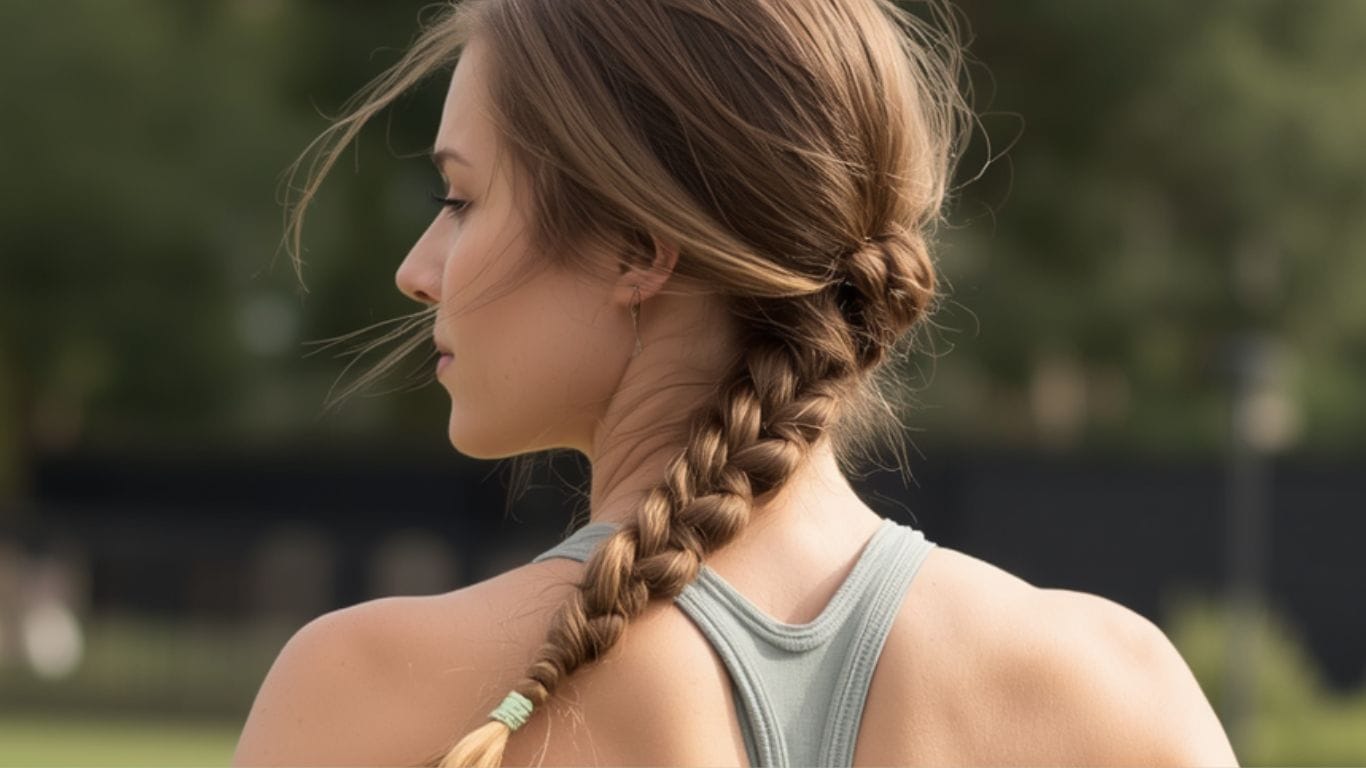
You put thought into your workout gear. You choose the right shoes for the surface, the right fabric for the sweat. But when it comes to your hair? Most of us default to the same tight ponytail we’ve been wearing since middle school gym class — and our scalp pays the price.
The truth is, how you wear your hair during exercise matters more than you might think. The wrong style can cause friction-induced breakage, chronic follicle stress at the hairline, and the kind of cumulative thinning that doesn’t become obvious until much later. The right style, on the other hand, keeps hair contained and comfortable — and actively protects your scalp while you work. 🌿
At Ahimsa, our philosophy is rooted in non-harming — to the earth, to your body, and to your hair. That principle extends right to how you style before you move. This guide breaks down the best hairstyles for every type of workout, explains the science of why certain styles cause damage over time, and gives you the full Ahimsa approach to protecting your scalp no matter how hard you train. 💚
Why Your Workout Hairstyle Affects Scalp & Hair Health 🔬
Before we get into specific styles, it’s worth understanding what’s actually happening to your hair during exercise — because the mechanical forces at work are real.
Traction Stress: The Silent Culprit 🎀
Every time you pull your hair into a tight elastic, you’re creating traction — sustained tension on the hair follicle. A single workout isn’t the problem. But a tight high ponytail worn four, five, six days a week creates repeated mechanical stress on the same follicles. Those follicles sit at the temples, nape, and hairline. This is the mechanism behind traction alopecia — gradual hair thinning caused not by genetics or hormones, but by styling habits alone.
The higher and tighter the ponytail, the greater the tension. During exercise, your scalp is already sensitized by heat and sweat. That tension lands on a follicle already under stress. The damage compounds quietly over time. By the time you notice thinning at the edges, it’s been developing for months.
Friction Damage: Hair vs. Hair and Hair vs. Surface ⚡
Running, cycling, and HIIT create constant motion. That motion generates friction — between your strands, between your hair and your collar, and between your hair and your hair tie. Your hair’s outer cuticle (the overlapping protective scales that give hair its shine) is gradually worn down by that repeated friction. Over time, strands become dull, rough, and prone to breakage. Styles that keep hair neatly contained — braids, low buns, flat twists — minimize this friction significantly. A loose ponytail that swings and brushes against itself does the opposite.
Sweat Concentration & Scalp Irritation 💧
Tight, dense styles trap heat and sweat against the scalp — particularly at the nape, crown, and hairline. This creates pockets of prolonged sweat contact. Over time, that contact disrupts your scalp’s natural pH and microbiome balance. If you wear the same style every workout, you’re also stressing the same scalp areas repeatedly. Varying your part, your style placement, and your tie-up points distributes that load. It gives stressed areas a chance to recover between sessions.
The Best Hairstyles by Workout Type 🏃♀️🧘♀️🏊♀️🚴♀️
Different activities create different hair challenges — and the best style for a run isn’t necessarily the best style for a lifting session or a yoga class. Here’s exactly what to wear and why. 🌿
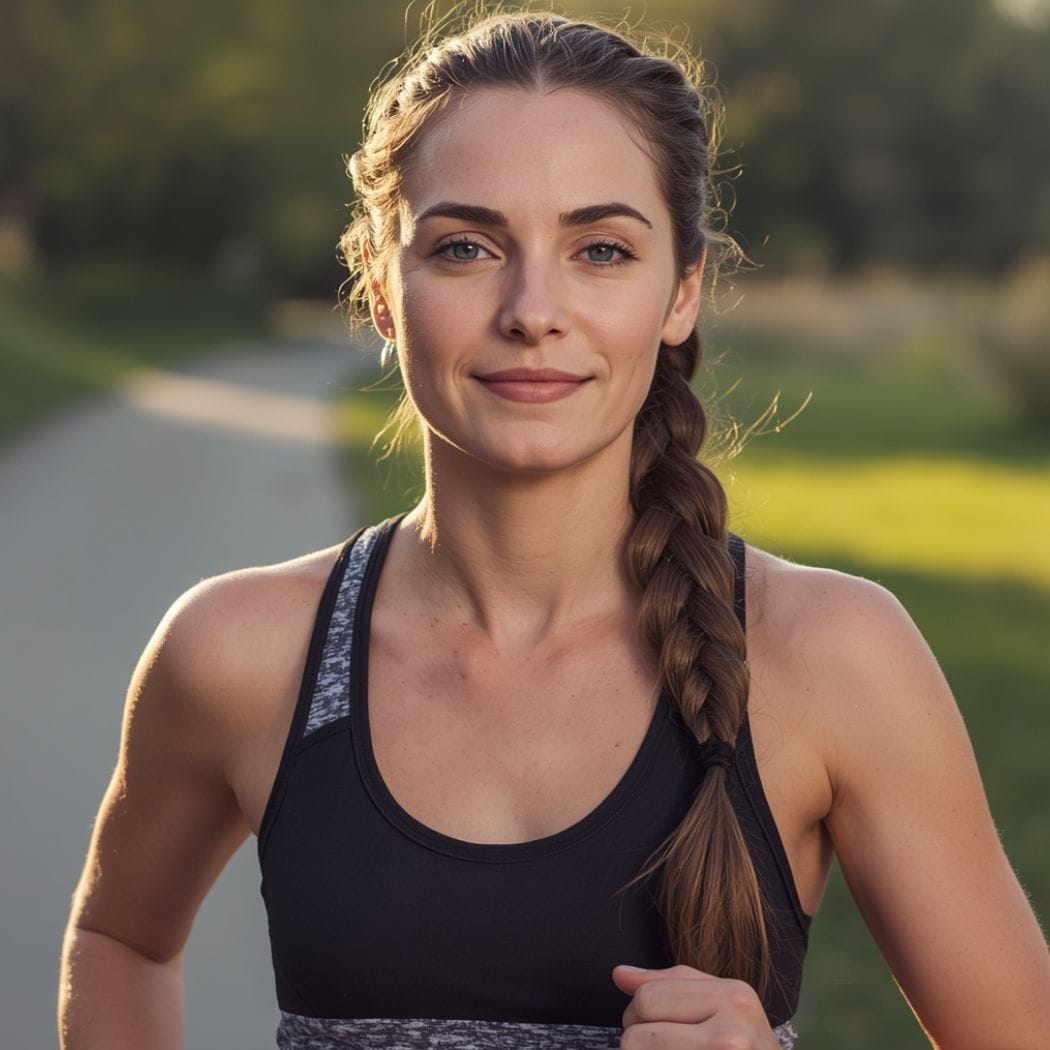 🏃♀️ Running: The French Braid or Low Braid
Why it works: Running creates sustained, repetitive vertical movement. A loose ponytail bounces and swings with every stride — creating constant friction on the hair shaft. A French braid or Dutch braid is the gold standard for runners. It lies flat against the head, eliminates swing, minimizes friction between strands, and distributes pulling force across a wide scalp area rather than concentrating it at one elastic point.
How to wear it: Start the braid high and tight at the crown, incorporating sections all the way down to keep it flat and secure. Finish with a soft, seamless elastic — never a metal-core hair tie. Metal cores act like a cutting edge on your strands with every stride. For shorter hair, a low braided bun at the nape achieves the same low-friction result.
What to avoid: A high, tight ponytail (called a “runner’s pony”) — this is the most common choice and the most damaging. The constant bounce creates friction on the tail, the elastic cuts into the hair at one concentrated point, and the tight crown placement creates significant traction stress.
Scalp tip: After a run, apply Ahimsa’s Dry Mist Shampoo directly to the braid line, hairline, and nape — the areas where sweat concentrates most — before letting hair down and rinsing or washing. 💨
🏋️ Strength Training & HIIT: The Low Bun or Wrapped Ponytail
Why it works: Lifting and HIIT sessions involve a combination of stationary effort and explosive movement — and unlike running, your head is often in a neutral or tilted position rather than perfectly upright. A low bun at the nape or a wrapped (no-crease) ponytail at the mid-occipital gives you the security to move without interference, while placing the stress point well below the hairline’s vulnerable edges.
How to wear it: For a low bun: gather hair at or below the natural curve of the skull, twist into a bun, and secure with a soft elastic and bobby pins if needed. The lower the bun, the less traction stress on the crown. For a wrapped ponytail: tie at mid-height (not high on the crown). Wrap a section of hair around the elastic and pin it. This eliminates the crease that standard elastics leave and distributes grip more evenly.
What to avoid: High “ballet bun” styles during heavy lifting — the downward force of loaded movement combined with the upward tension of a high bun is a particularly stressful combination for the crown. Also avoid double elastic “gym pony” styles that stack tension at two points.
Scalp tip: If you sweat heavily during HIIT, alternate which side you part your hair on each session. This simple shift means you’re not repeatedly stressing the same follicles day after day — a small habit with meaningful long-term benefit for your hairline. 🌱
🧘♀️ Yoga (Including Hot Yoga): The Loose Bun or Soft Braid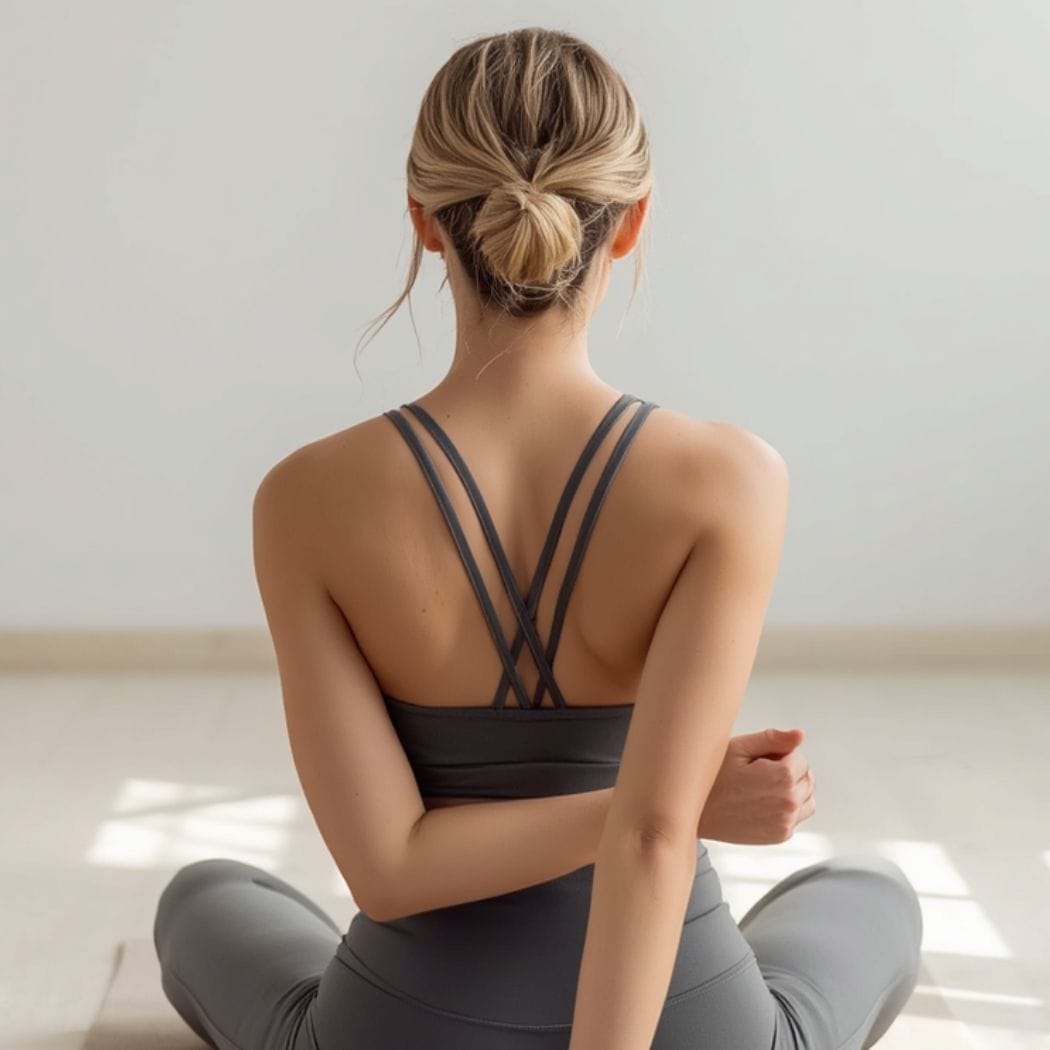
Why it works: Yoga involves inversions, floor work, and sustained poses. Your hair contacts your mat — creating friction from a direction that standard ponytails and buns weren’t designed to address. A loose bun secured with a silk scrunchie or a single loose braid keeps hair contained for inversions. It does this without pulling at the scalp during downward dog or floor sequences. The softness of the scrunchie matters. Standard elastics grip the hair too aggressively at the root for a practice with so much head movement.
For hot yoga specifically, the goal is to contain hair while allowing as much air circulation to the scalp as possible — a tight updo traps heat and sweat more aggressively, while a soft bun or braid allows some breathability. 🌬️
How to wear it: Gather hair at the nape (not the crown) and twist into a low bun or braid. Secure with a silk or satin scrunchie. Leave the bun slightly loose — it doesn’t need to be perfect; it just needs to stay off your face. Pull it low enough that it doesn’t press against the mat when you’re on your back.
What to avoid: Tight top knots during long or heated practices — these look clean but create significant traction stress at the crown and trap heat directly against the most active sweat zones of the scalp.
Scalp tip: Before hot yoga, apply a light layer of Ahimsa’s Hair & Body Oil Mist to your lengths and ends. This creates a breathable protective barrier against the humidity and heat of the room — especially valuable for wavy and curly hair types that respond dramatically to moisture fluctuations. ✨
🚴♀️ Cycling (Indoor & Outdoor): The Flat Double Braid or Low Ponytail Under Helmet
Why it works: Helmet-wearing adds a unique styling consideration that most hairstyle guides don’t address: your hair has to work with the helmet, not fight against it. High ponytails and top buns push against the helmet dome, creating pressure that digs into the scalp during long rides. Flat double braids (two braids worn parallel or as pigtails) lie flat against the sides of the head and fit neatly under a helmet without creating pressure points. For outdoor cyclists, they also keep hair completely off the face and neck without any flyaways.
For indoor cycling, a low ponytail (positioned at or below ear level) allows the helmet to sit correctly and keeps hair away from the collar and resistance controls.
How to wear it: Part down the center and create two braids starting at the temples, bringing them down below the ears. Secure with seamless elastics. These also look great once the helmet comes off — making them ideal for riders who are heading somewhere after their session.
What to avoid: Top buns or high ponytails under a helmet — these create concentrated pressure points at the crown that can cause localized scalp soreness and cumulative follicle stress over long rides.
Scalp tip: Post-ride, pay extra attention to the nape and the braid lines when applying Ahimsa’s Dry Mist Shampoo — the areas pressed against a helmet trap heat and sweat most aggressively. 🚴♀️
🏊♀️ Swimming: The Tight Dutch Braid or Braided Bun
Why it works: Swimming is a unique case — the goal is waterproofing as much as styling. No style is truly waterproof. But a tight Dutch braid or a braided bun significantly reduces the surface area of hair exposed to chlorine or saltwater. It keeps strands pressed flat against each other, limiting how much pool water penetrates to the innermost layers.
Loose styles allow chlorinated water to circulate freely between strands throughout the entire session — maximum chlorine contact, maximum damage. A braid limits this by pressing strands together.
How to wear it: Dutch braid the hair tightly, then coil the tail into a bun and secure at the nape. Tuck under your swim cap completely if possible. Before getting in the water, wet your hair with fresh water and apply a light layer of Ahimsa’s Leave-in Conditioner. Your hair can only absorb so much water at once. Saturating it with clean water first significantly reduces the chlorinated water it takes on during the swim. 💧
What to avoid: A simple ponytail under a swim cap — the elastic is a single point of concentrated contact and the loose tail sits against itself in a water-soaked mass, maximizing strand-on-strand friction.
🎾 High-Intensity Sports (Tennis, Basketball, Soccer): The Half-Up Braid or High Braid Pony
Why it works: Sports with lateral movement and sudden direction changes require styles that are very secure and completely face-forward — nothing falling in the eyes mid-motion. A high braid ponytail (a ponytail with the length itself braided) gives you the security of a traditional ponytail. The braided tail also dramatically reduces the friction and split-end damage caused by a loose tail whipping around during play.
For hair that’s medium-to-short, a half-up braid — pulling back the crown section into a braid tied at the back, with the lower layers left loose — keeps the face completely clear without requiring a full updo.
How to wear it: Create a high ponytail with a seamless elastic. Braid the ponytail loosely from base to tip and secure the end. Alternatively, create a high ponytail and wrap it into a sleek bun for maximum containment during contact sports.
What to avoid: Loose half-up styles or top-half clips during any high-contact sport — these come loose during play and require constant re-adjustment, which means more friction, more fussing, and more traction stress each time you redo them mid-game.
 The Universal Ahimsa Rules for Workout Hairstyles 🌿
Regardless of the sport or activity, these principles apply across every workout hairstyle: 💚
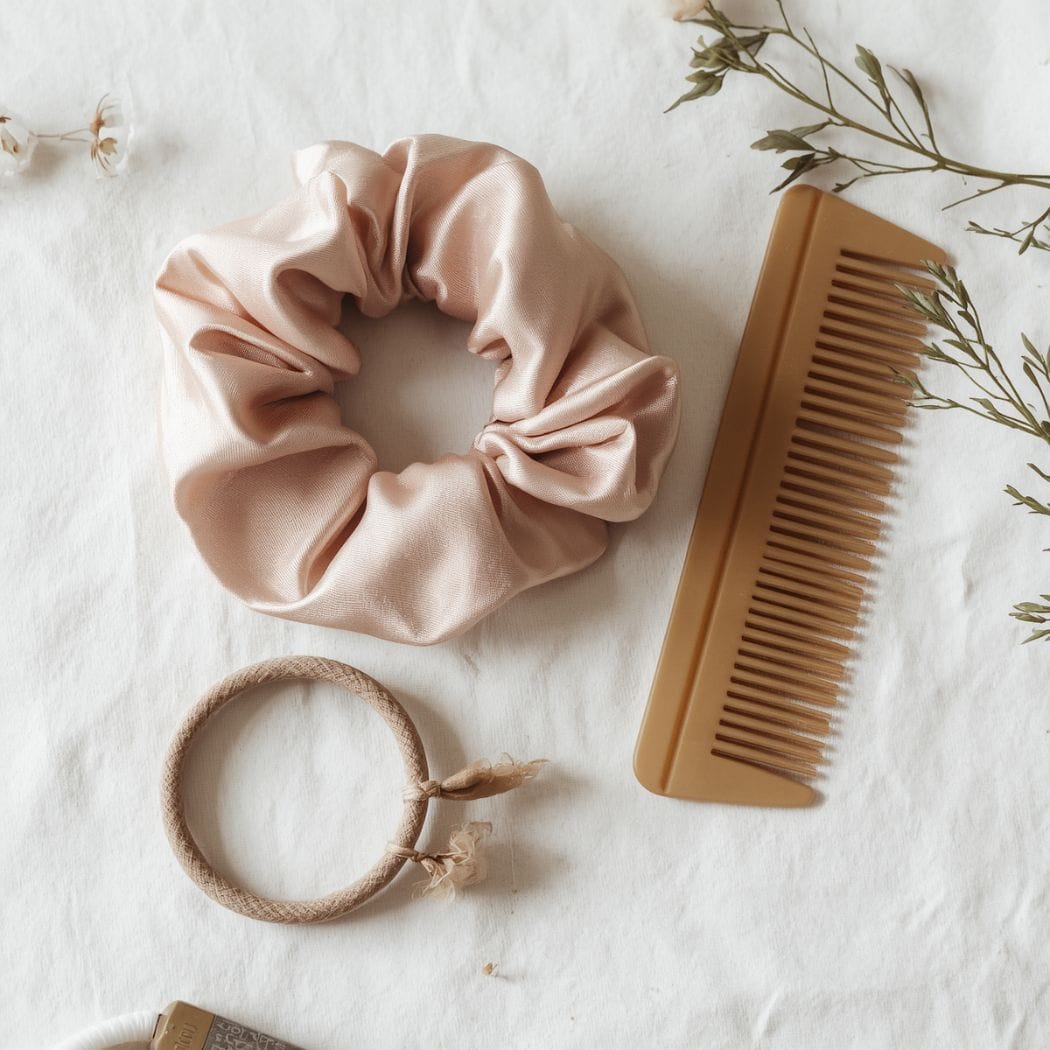
1. Always use seamless, metal-free elastics. Metal-core hair ties act like tiny blades on your hair shaft. Seamless silicone or fabric elastics grip without cutting. Silk scrunchies go further — they reduce friction at the band point and leave no crease. This is the single highest-return swap you can make for your hair’s long-term health.
2. Vary your style and your placement. If you wear the same style at the same height every single day, you’re applying traction to the same follicles repeatedly. Rotate between a low bun, a braid, and a wrapped ponytail across the week. Shift your part slightly. These small variations meaningfully reduce the cumulative traction load.
3. Never style on dirty, product-heavy hair without refreshing first. Sweating into hair loaded with dry shampoo, hairspray, or styling product creates buildup against the scalp. That buildup traps heat and promotes irritation. If your hair has buildup, a quick spray of Ahimsa’s Dry Mist Shampoo freshens the scalp without a full wash. It gives you a clean slate that’s much kinder to your scalp microbiome. 🌿
Protect, Recover, Repeat 🌱
4. Apply a protective layer before high-heat or high-humidity workouts. For hot yoga, outdoor summer runs, or indoor cycling classes, apply a small amount of Ahimsa’s Hair & Body Oil Mist to your lengths before styling. This creates a lightweight protective barrier between your hair shaft and your workout environment. It slows cuticle lift in humidity and reduces moisture loss in heat.
5. The tighter the style, the more important your post-workout care becomes. A tight braid or ponytail held for 60–90 minutes during a hard workout leaves the scalp temporarily sensitized. Following up with a gentle, pH-balanced cleanse — and not over-washing — allows that follicle stress to resolve rather than accumulate. See how often to actually shampoo as an active person. Your workout frequency doesn’t automatically mean daily washing. 💡
 Building Your Post-Workout Routine Around Your Style 🚿
The hairstyle you choose during your workout directly affects what your hair needs afterward. Here’s a quick guide: ✨
After braids and buns that kept hair tightly contained against the scalp during a high-sweat session, gently finger-detangle before letting hair fully down — yanking a braid open in a rush pulls on already-stressed cuticles. Let the hair breathe for a few minutes before reaching for your product or the shower.
For wash days, Ahimsa’s Gentle Daily Shampoo is formulated for the active scalp. It’s pH-balanced and sulfate-free — so it cleanses thoroughly without stripping the oils your scalp has worked to produce between sessions. For sessions with heavy sweat or product buildup, the Purifying Shampoo provides a deeper detox without disrupting the scalp’s acid mantle.
On non-wash days, the Dry Mist Shampoo absorbs sweat and neutralizes odor at the scalp without powder residue, clogged follicles, or pH disruption — so you can practice smart wash frequency even with a daily workout schedule. 💨
After every wash, apply Ahimsa’s Leave-in Conditioner to damp hair. It seals the cuticle, replaces moisture lost during exercise and cleansing, and protects against the friction and stress of your next session. Think of it as your hair’s recovery tool — the equivalent of a protein shake after the workout. 🌱
The Ahimsa Philosophy: Movement Shouldn’t Mean Damage 💚
Active people often accept a certain amount of hair damage as the price of working out — the dryness, the breakage, the thinning at the edges. But at Ahimsa, we believe movement and healthy hair aren’t in conflict. The right hairstyle, the right pre-workout barrier, and the right post-workout care create a complete system that lets you train as hard as you want without your hair paying the price.
Your practice is about non-harming — in every direction, for every part of you.
Ready to build a complete hair care routine for your active lifestyle? Explore Ahimsa’s full collection of clean, sulfate-free, microbiome-friendly hair care — designed for people who move. 🌿✨
You Might Also Like 🔗
- Post-Workout Hair Care: The Yogi’s Guide to Healthy Hair
- What Happens to Your Scalp in a Hot Yoga Class (And How to Fix It)
- Chlorine & Your Scalp: A Natural Hair Care Routine for Swimmers
- Salt, Sun & Sweat: Natural Hair Care Routine for the Beach
- The Mindful Wash: How Often to Shampoo & Why It Matters
- Scalp Microbiome 101: Why Your Scalp Health Determines Hair Growth
Sources 📚
- American Academy of Dermatology: Traction Alopecia
- Journal of the American Academy of Dermatology: Traction Alopecia — the Root of the Problem
- International Journal of Trichology: Hair Cosmetics — An Overview
- PMC: Scalp Microbiome and Topical Treatments
- NIH: Hair Structure and the Hair Cycle
© Ahimsa Hair Care. All rights reserved.