
 0
0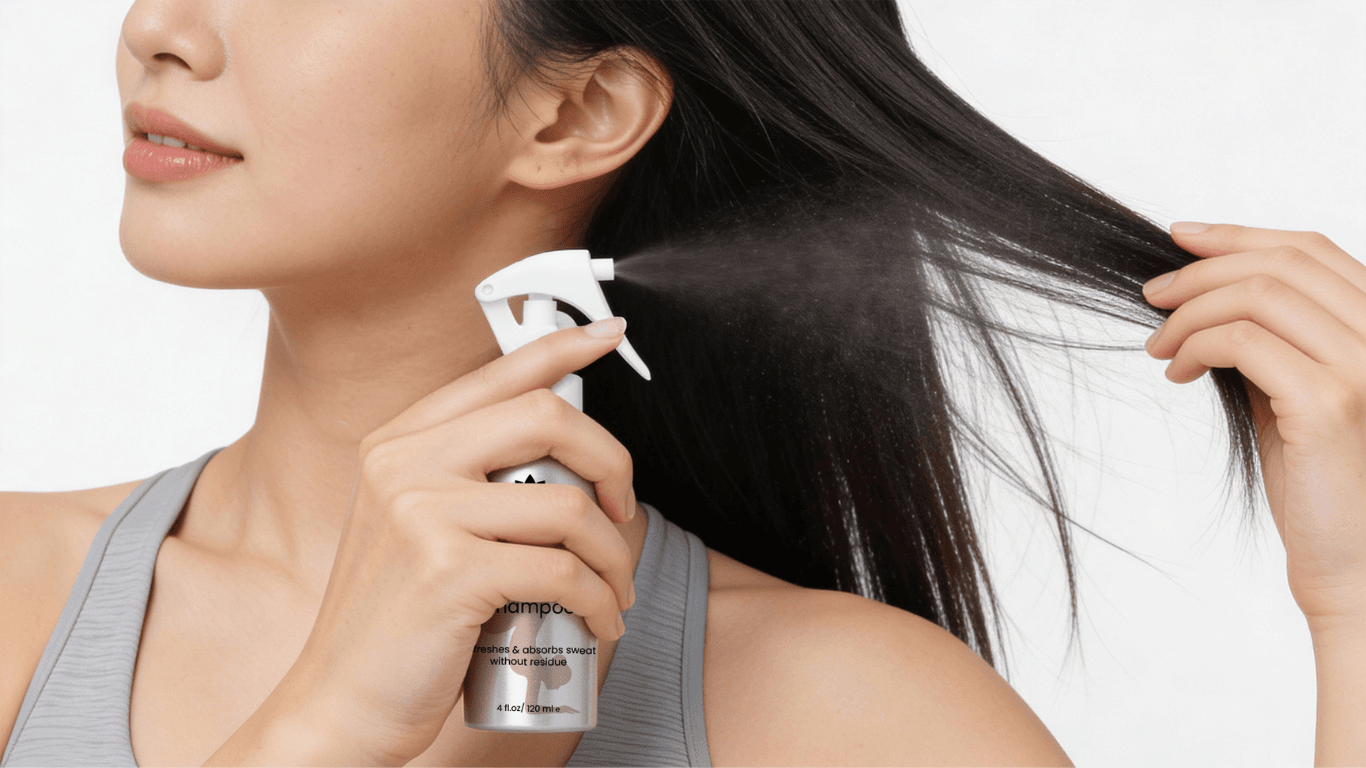
Dry shampoo is one of the most used products in an active woman’s routine. Between washes, it buys you time. After a workout, it absorbs sweat. And on day two, it makes a blowout look like it just happened.
But dry shampoo is also one of the most misunderstood products in hair care.
The category has a serious transparency problem. Most brands don’t explain what’s actually in their products. They don’t explain what happens to your scalp when you use them regularly. And they definitely don’t explain why an entire format — the aerosol spray — came under federal scrutiny for contamination with a known human carcinogen. 🔬
At Ahimsa, we built our Dry Mist Shampoo specifically to address the biggest structural problems with the conventional aerosol dry shampoo category. This post explains what those problems are, why they matter for active women in particular, and what a better alternative looks like. 💚
Let’s be clear about something first: this isn’t a brand pitch. It’s the full picture — the one most dry shampoo brands would prefer you didn’t have. So let’s break it down — problem by problem.
The Dry Shampoo Market: What You’re Actually Buying 🛒
Dry shampoo is a $5 billion global category. Most products on the market are aerosol sprays. These are pressurized cans that combine an oil-absorbing agent with a propellant to create a fine mist. The format is convenient, fast, and satisfying. It’s also where most of the problems start.
Here’s what a standard aerosol dry shampoo actually contains:
The oil-absorbing agent: Typically rice starch, tapioca starch, or kaolin clay. These are the ingredients doing the actual work — absorbing sebum and sweat at the scalp. On their own, they’re relatively benign.
The propellant: Isobutane, butane, or propane — hydrocarbon gases derived from petroleum. These create the pressurized spray that delivers the product. They are also the source of the category’s biggest safety problem. More on this shortly.
Fragrance: Used to mask the chemical smell of the propellants. In aerosol form, fragrance compounds are inhaled directly during application. This is worth noting for anyone using dry shampoo in a bathroom or locker room.
Problem 1: The Benzene Issue 🚨
In November 2021, Valisure — an independent analytical laboratory — tested 148 batches of dry shampoo from 34 brands. They found benzene contamination in many of them. Several samples contained benzene at levels far above the FDA’s recommended limit of 2 parts per billion.
Benzene is a known human carcinogen. The EPA classifies it with no safe level of exposure. Long-term benzene contact is linked to leukemia, lymphoma, and other blood cancers. It has no useful role in hair care. Its presence in aerosol dry shampoos was entirely unintentional — but it was also entirely predictable.
The source was the propellant. Benzene is a natural contaminant of petroleum products. The butane and isobutane in aerosol cans are supposed to be purified to remove it. In many cases they weren’t.
What followed was one of the largest personal care product recalls in recent history. Unilever pulled aerosol dry shampoos from Dove, Nexxus, Suave, TRESemmé, and Bed Head. A class action lawsuit followed. Unilever agreed to pay $3.625 million in a proposed federal settlement. The lawsuit alleged its products contained dangerous levels of benzene. Plaintiffs alleged the company knew about the risk as early as 2021.
The critical finding that reframes the entire category: the benzene was not in the formula. It was in the hydrocarbon propellant used to make the aerosol spray.
This is important. It means the problem isn’t an isolated manufacturing error. It’s structural. Any aerosol dry shampoo using hydrocarbon propellants carries this contamination risk — regardless of how clean the rest of the formula is.
Non-aerosol formats use no propellant. They have zero exposure to this contamination pathway.
What This Means for Active Women 💪
Regular aerosol dry shampoo use means repeated exposure over months and years. That cumulative exposure is worth taking seriously. The risk isn’t theoretical. It resulted in a federal recall and a multimillion-dollar legal settlement.
Problem 2: The Inhalation Risk 🫁
Dry shampoo sprays are typically applied close to the face. Both the powder and the propellant can be inhaled during application — especially in small bathrooms or enclosed spaces.
This applies even to aerosol dry shampoos that test clean for benzene. The propellant itself — isobutane, butane, propane — is not something you want to inhale regularly. Neither is the starch or powder base in concentrated spray form.
Most people apply dry shampoo in small, poorly ventilated spaces — a locker room, a bathroom, a car. These are exactly the conditions that maximize inhalation exposure. Standard application instructions — “hold 8 to 12 inches from scalp” — reduce but don’t eliminate this risk.
The inhalation issue applies to every aerosol dry shampoo regardless of benzene status. It comes from the format, not the formula.
Problem 3: Scalp Buildup and Follicle Disruption 🔬
Beyond the benzene risk, there’s a second structural problem with powder-based dry shampoos. The oil-absorbing agents — rice starch, tapioca starch, kaolin clay — work by sitting on your scalp and absorbing sebum.
Every application leaves powder residue on the scalp. That layer is designed to absorb oil — but it keeps absorbing after you brush it through. It absorbs your scalp’s natural protective sebum — and physically sits inside the follicle opening, creating a layer of buildup that accumulates with each use.
This matters enormously for your scalp microbiome. Your scalp hosts a complex ecosystem of microorganisms. They regulate inflammation, protect against pathogens, and support healthy hair growth. That ecosystem depends on a stable pH environment and unobstructed follicle access. Regular powder buildup disrupts both.
The result over time: scalp that feels itchy and congested. Hair that looks dull even on wash days. A cycle where you need more dry shampoo more often because your scalp’s natural balance has been compromised. 🌀
For active women, the buildup problem is compounded. You’re already dealing with sweat residue, salt deposits, and lactic acid on the scalp from workouts. Layering powder dry shampoo on top of post-workout buildup creates a combined layer. It traps heat, extends pH disruption, and increases the inflammatory load on your follicles.
This is why how often you actually need to wash is such an important question for active women. The product you use between washes matters just as much as the shampoo itself.
Problem 4: White Cast and the Dark Hair Problem 🎨
This is the most visible problem and the one most people know about. Starch and clay-based powders are white. They leave a white or grey cast on the scalp and roots that requires significant brushing and blending to remove — and often doesn’t fully disappear.
For women with dark, brunette, or black hair, this is a persistent frustration. Brands have responded with “invisible” formulas, tinted versions, and “clear” aerosols. These reduce but rarely eliminate the issue. The cast appears because the powder is there. There is no starch-based aerosol that completely eliminates this.
What to Actually Look For in a Dry Shampoo 🌿
Given everything above, the question becomes: what should you actually look for? Here’s the framework:
1. Non-Aerosol Format ✅
This is the non-negotiable. Non-aerosol formats use no propellant, giving them zero exposure to the benzene contamination pathway. They also eliminate the inhalation risk of pressurized spray. A pump, mist, or applicator bottle delivers the product without any of the structural problems inherent to the aerosol format.
2. Powder-Free Formula ✅
Choosing a dry shampoo that cleans without depositing powder eliminates the buildup and follicle-clogging problem entirely. This requires a different mechanism — liquid-based absorption rather than powder-based absorption. It’s harder to formulate but significantly better for scalp health.
3. pH-Balanced ✅
The best dry shampoos are formulated to match or complement your scalp’s natural pH of 4.5–5.5. This is rarely disclosed on product labels. But it’s one of the most important factors in whether a between-wash product helps or harms your scalp over time.
4. No White Cast ✅
A powder-free liquid formula leaves no residue on the scalp or hair. Zero cast, zero blending required, zero compromise for dark hair.
Why We Built the Ahimsa Dry Mist Shampoo 🌿
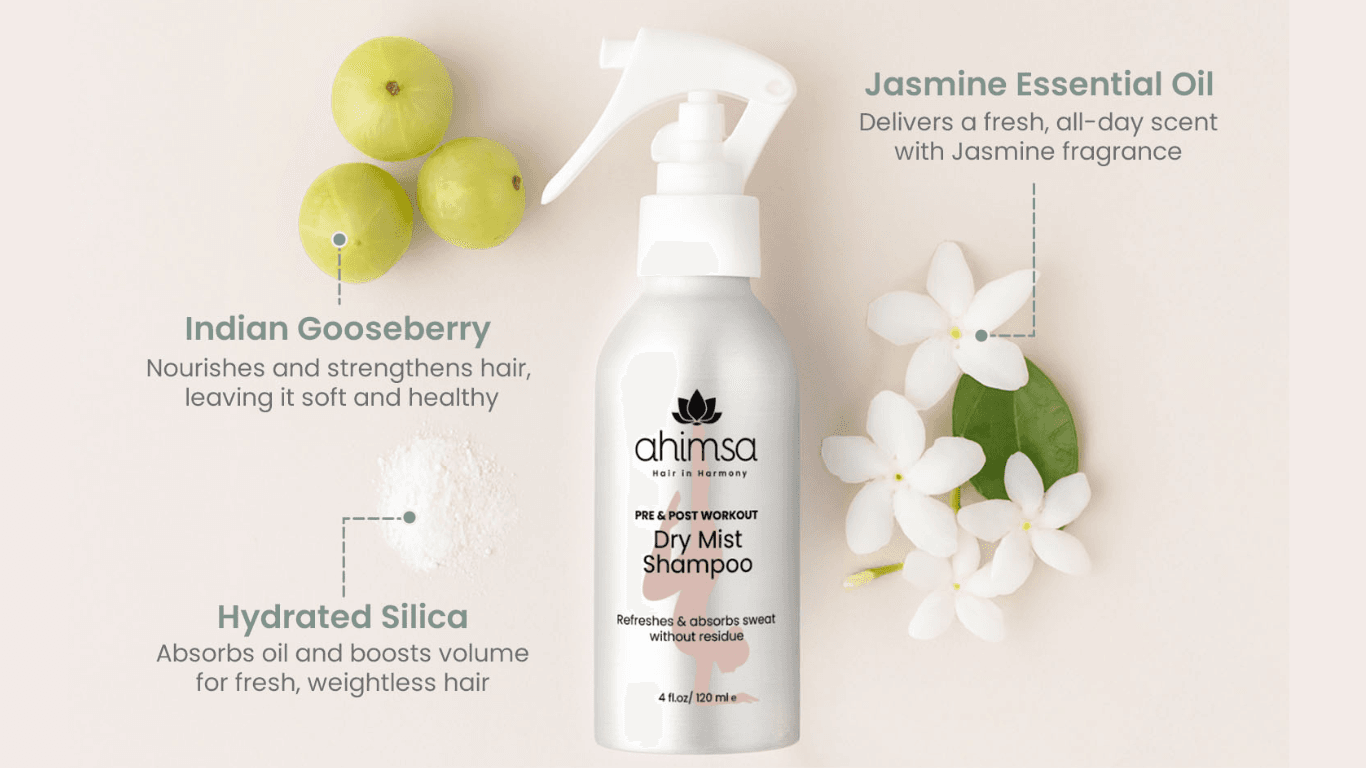 Ahimsa’s Dry Mist Shampoo was designed specifically around the structural failures of the aerosol dry shampoo category. Here’s exactly how it addresses them:
Non-aerosol pump bottle — no propellant, no benzene contamination pathway, no inhalation risk from pressurized spray. The aluminum bottle is also infinitely recyclable, which matters if you’re using a product multiple times a week.
Powder-free liquid formula — absorbs sweat and neutralizes odor at the scalp without depositing any powder residue. No buildup, no follicle clogging, no white cast on any hair color.
pH-balanced — formulated to complement the scalp’s natural environment so your microbiome stays stable between washes.
Indian Gooseberry (Amla) — Ahimsa’s signature ingredient. Amla is rich in Vitamin C and antioxidants that support scalp health and follicle strength. Instead of just absorbing sebum and leaving, the Dry Mist actively nourishes the scalp while refreshing it. That’s a fundamentally different standard than what aerosol dry shampoos offer.
Jasmine Essential Oil — provides a clean, natural fragrance without synthetic fragrance compounds or alcohol-based scent delivery. 🌸
How to Use the Ahimsa Dry Mist Shampoo 💨
For the full breakdown, see our guides to the pre-workout hair ritual and the gym bag hair kit. They cover exactly where to apply it, how long to let it absorb, and when to use it versus a full wash.
The short version:
Pre-workout: Apply to the scalp on non-wash days before training. Focus on the hairline, temples, crown, and nape. Let absorb for 60 seconds. Brush through. This removes existing buildup before you add the heat and sweat of a new session on top of it.
Post-workout: Apply to the same zones after training. Absorbs sweat and neutralizes odor instantly. Zero powder residue. Clean finish. Ready to go. 💚
Between wash days: Use as needed to extend time between washes — supporting smart wash frequency without compromising scalp health.
When Dry Shampoo Isn’t Enough: The Ahimsa Shampoo System 🚿
The Dry Mist is not a permanent replacement for washing. It’s a tool that makes smart wash frequency possible. When it’s time for a full wash, what you use matters as much as how often.
For most active women, a two-shampoo system works best:
Ahimsa Gentle Daily Shampoo — sulfate-free and pH-balanced for regular wash days. Cleanses thoroughly without stripping the natural oils your scalp works hard to produce between sessions. Gentle enough to use 2–3 times per week without disrupting your scalp’s baseline.
Ahimsa Purifying Shampoo — for deeper cleanse days. Willow Bark Extract acts as a natural salicylic acid. It dissolves buildup at the scalp the way harsh sulfates do — but without stripping or pH disruption. Use once a week or after particularly heavy training sessions. For more on when and why to use a purifying shampoo, see our full detox guide.
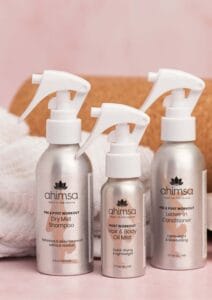
This three-product approach gives active women a complete system that works with their scalp rather than against it. Dry Mist between washes. Gentle Daily for regular wash days. Purifying for weekly deep cleanse. 🌿
The Bottom Line 💚
 Most dry shampoos are not designed with your scalp health in mind. They’re designed for convenience — and the compromises made in pursuit of that convenience have real consequences for the people using them regularly.
The benzene recall wasn’t a freak accident. It was the predictable result of a format that relies on petroleum-derived propellants. The scalp buildup isn’t a minor inconvenience. It’s a cumulative disruption to one of the most important ecosystems for your hair health. The alcohol isn’t just drying. It’s actively working against the pH balance your scalp needs to function.
Active women deserve better — a product that actually works between washes without creating new problems. One built around scalp health rather than in spite of it.
That’s what we built. And now you know exactly why. 🌿✨
Explore Ahimsa’s full hair care collection — clean, sulfate-free, and designed for women who move.
You Might Also Like 🔗
- The Gym Bag Hair Kit: Everything an Active Woman Actually Needs
- The Pre-Workout Hair Ritual: How to Prep Your Hair Before You Sweat
- The Mindful Wash: How Often to Shampoo & Why It Matters
- Scalp Microbiome 101: Why Your Scalp Health Determines Hair Growth
- Ahimsa’s Purifying Shampoo: Elevate Your Haircare Routine With Our Detox Solution
- Hair Porosity 101: How to Identify Your Type & Choose the Right Products
Sources 📚
- Valisure: Benzene in Dry Shampoo (November 2021)
- FDA: Benzene in Cosmetics — Safety Concerns
- Lawsuit Information Center: Dry Shampoo Lawsuits — July 2025 Update
- AKD Law: Dry Shampoo Recall 2025 — What Consumers Should Know
- PMC: Scalp Microbiome and Topical Treatments
- International Journal of Trichology: Hair Cosmetics — An Overview
- NIH: Hair Structure and the Hair Cycle
- Chagrin Valley Soap: Dry Shampoo Recall — Not All Dry Shampoos Are Created Equal
© Ahimsa Hair Care. All rights reserved.