
 0
0
You think about your shoes, your hydration, your pace, your route. Your sports bra, your playlist, whether your watch is charged.
But your hair? Most runners give it a quick pull into a ponytail and move on.
That ponytail — repeated four or five times a week, at the same tightness, in the same spot — is quietly doing more damage than almost any other single habit in a runner’s routine. And that’s before you factor in the sweat, the UV exposure, the wind, and the friction of hair moving with every stride. 🌿
Runners are one of the most active populations on earth. But they’re also one of the least served by the hair care industry. Most brands focus on hot yoga, swimming, or general gym routines — without addressing the specific challenges running creates. This guide changes that.
At Ahimsa, we built our products for women who move hard and move often. This is the complete hair care guide for runners. It covers what happens to your hair during a run, how to protect it before you head out, what to do the moment you get back, and how to build a routine around your training schedule. 💚
What Running Does to Your Hair and Scalp 🔬
 Understanding the damage is the first step to preventing it. Every run creates four distinct stressors on your hair — and most runners are dealing with all four simultaneously.
Sweat: pH Disruption at the Scalp 💧
Running is a high-sweat activity. During a moderate 45-minute run, your scalp produces significant sweat — and that sweat is not neutral. It contains salt, lactic acid, and urea. As it sits on your scalp during and after a run, it pushes your scalp’s pH outside its optimal range of 4.5–5.5.
That pH shift matters. Your scalp microbiome — the complex ecosystem of microorganisms that regulates scalp health and supports hair growth — depends on a stable, mildly acidic environment. When sweat disrupts that environment repeatedly, the result is irritation, itchiness, and a scalp that feels congested even on rest days.
For daily runners, this isn’t an occasional disruption. It’s a chronic condition — unless you have a routine specifically designed to manage it.
UV Exposure: The Overlooked Hair Stressor ☀️
Most runners know to protect their skin from UV radiation. But hair is exposed to the same sun for the same duration — and very few runners think about protecting it.
UV radiation degrades the protein structure of your hair shaft over time. Specifically, it breaks down the disulfide bonds that give hair its strength and elasticity. The result is dryness, brittleness, and fading — particularly for color-treated hair. For outdoor runners logging significant weekly mileage, UV exposure accumulates into meaningful structural hair damage over a training season.
A lightweight oil applied before a run creates a barrier between your hair shaft and UV radiation. It’s not a sunscreen — but it significantly slows the rate of UV-induced cuticle degradation compared to unprotected hair.
Friction: Stride by Stride Cuticle Damage ⚡
Every running stride creates movement. Your hair moves with your body — and that movement creates friction. Friction between strands, between your hair and your collar, between your hair and your headband. Each point of contact gradually wears down the outer cuticle layer of your hair shaft.
A loose ponytail that swings with each stride is among the worst possible running hairstyles for friction. The tail brushes against itself and your back hundreds of times per mile. Over a long run, that adds up to thousands of friction events on the same strands, in the same direction, at the same contact points.
The fix is simple — but most runners don’t know it. More on this in the styling section below.
Traction Stress: The High Ponytail Problem 🎀
This is the most significant and most reversible hair problem specific to runners. The high, tight ponytail — the default choice for almost every female runner — creates sustained traction on the hair follicles at the crown, temples, and hairline.
A single run in a tight high ponytail doesn’t cause visible damage. But the same ponytail worn at the same tightness and position, four or five times a week for months, creates cumulative mechanical stress on the same follicles. This is the mechanism behind traction alopecia — gradual thinning that begins at the temples and hairline and becomes visible long after the damage has started.
The higher and tighter the ponytail, the greater the traction. This is fixable with one simple styling change — and it’s one of the highest-return adjustments any runner can make for long-term hair health.
Before Your Run: The Pre-Run Hair Ritual 🌿
The pre-workout hair ritual is where prevention begins. For runners specifically, five minutes of preparation before you head out significantly reduces the damage load your hair absorbs during the run. Here’s what to do:
Step 1: Apply a Protective Barrier 🛡️
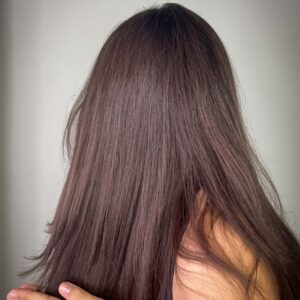 Before styling, apply Ahimsa’s Leave-in Conditioner from mid-shaft to ends. This does three things for runners:
First, it seals the hair cuticle before UV radiation, heat, and friction have a chance to open it. Second, it provides a slip layer that reduces friction between strands during each stride. Third, it pre-hydrates the hair shaft so moisture loss during a long run starts from a higher baseline.
For longer runs or sunny conditions, follow with two to three spritzes of Ahimsa’s Hair & Body Oil Mist on the lengths. The oil creates an additional barrier against UV degradation and slows moisture loss during high-heat outdoor runs. ✨
Step 2: Reset Your Scalp on Non-Wash Days 💨
If you’re running on a non-wash day with existing buildup on your scalp, apply Ahimsa’s Dry Mist Shampoo to the scalp before you go. Focus on the hairline, temples, crown, and nape.
Running on a scalp with existing sweat residue compounds the pH disruption. It also extends the time harmful residue sits on your follicles. A pre-run Dry Mist reset gives you a clean starting point. The sweat from your current run then lands on a scalp that’s in balance rather than one already compromised. For more on why this matters, see the truth about dry shampoo.
Step 3: Style Low and Intentionally 🎀
This is the step that makes the biggest long-term difference for runners. For a full breakdown of the best hairstyle options for running, see our complete guide to the best hairstyles for every workout. The essential points for runners are:
The French or Dutch braid is the gold standard. It lies flat against the head and eliminates the swing and friction of a loose ponytail — distributing pulling force across a wide scalp area rather than concentrating it at one elastic point. Start high at the crown and braid all the way down. Secure with a seamless, metal-free elastic.
If you prefer a ponytail, wear it lower than you normally would — at or below the occipital bone at the back of the skull. A low ponytail reduces traction on the crown and temples significantly. Vary the height slightly on each run to distribute the load across different follicles.
Always use a seamless elastic. Metal-core hair ties act like a cutting edge across your hair shaft with every stride. Silk scrunchies or seamless elastics grip without cutting. This is the single highest-return swap in your entire running kit.
During Your Run: What to Know 🏃♀️
There’s not much to do mid-run — which is exactly the point. A good pre-run ritual means you can focus entirely on your pace and distance without touching your hair until you’re done.
However, a few habits during the run make a meaningful difference:
Headband choice matters. If you use a headband to keep hair off your face, choose a wide, soft fabric band rather than a thin elastic one. Thin elastic headbands create a band of chronic traction across the temporal hairline. This is one of the most common — and least recognized — causes of edge thinning in female runners. A wide fabric band spreads the pressure over a larger area and causes a fraction of the follicle stress.
Vary your style placement across runs. If you braid on Monday, try a low bun on Wednesday and a wrapped ponytail on Friday. This small variation means you’re not applying traction and friction to the same follicles and the same cuticle points on every single run. Over a training season, that variation makes a real difference.
Sun protection for your part line. If your hair is parted for your run, your part line is directly exposed to UV radiation for the entire duration. On long sunny runs, a light spritz of oil mist along the part line provides meaningful protection for this frequently overlooked exposure zone.
After Your Run: The Post-Run Routine 🚿
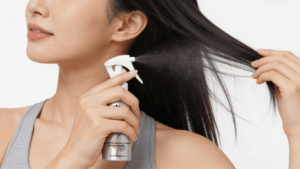 What you do in the first few minutes after a run matters as much as what you do before. Here’s the post-run routine built specifically for runners:
Immediate: Scalp Reset 💨
The moment you finish a run, your scalp has accumulated sweat, salt, and lactic acid from the session. If you’re not washing immediately — which you often won’t be — apply Ahimsa’s Dry Mist Shampoo to the scalp while your hair is still damp with sweat.
Apply to the hairline, temples, crown, and nape. Let it absorb for 60 seconds. Then gently massage and brush through. This neutralizes sweat odor, absorbs excess moisture at the scalp, and significantly reduces the time your scalp sits in a post-run pH-disrupted state before your next wash. 🌿
Detangling: Gentle First, Always 🌱
Post-run hair is vulnerable. The cuticle has been lifted by heat and UV exposure. Strands have been under friction for the duration of your run. This is the worst moment to drag a fine-tooth comb through your hair.
Instead, finger-detangle first. Work from the ends up toward the roots. Then follow with a wide-tooth comb and a small amount of Ahimsa’s Leave-in Conditioner on the lengths. The leave-in provides slip that makes detangling gentle rather than forceful — and restores the moisture your hair lost during the run at the same time.
Wash Days: What Runners Actually Need 🚿
Most runners feel compelled to wash their hair every day because they exercise every day. But daily washing strips your scalp of the natural oils that act as your first line of protection. Those same oils help buffer against the sweat, UV, and friction stress of each run.
The goal for most runners is 2–3 wash days per week, with the Dry Mist Shampoo managing between-wash days. When you do wash:
Ahimsa’s Gentle Daily Shampoo is the right choice for regular wash days. It’s sulfate-free and pH-balanced — so it cleanses thoroughly without stripping the oils your scalp has worked to produce between runs. Gentle enough to use multiple times a week without disrupting your scalp’s baseline.
After washing, always apply Ahimsa’s Leave-in Conditioner to damp hair. It seals the freshly cleaned cuticle, restores moisture, and prepares your hair for the next run.
Building a Running Hair Care Schedule 📅
The right schedule depends on how often you run and what your training looks like. Here’s a framework that works for most runners:
For Runners Training 3–4 Days Per Week
- Run days: Pre-run leave-in and oil mist. Post-run Dry Mist. Wash 1–2 times per week.
- Rest days: Let your scalp’s natural oils redistribute. Apply a light amount of leave-in to the ends if they feel dry.
- Weekly: One wash with the Gentle Daily Shampoo after your longest run of the week.
For Daily Runners
Daily training requires more consistent between-wash support. Use the Dry Mist Shampoo before and after every run on non-wash days. Wash 2–3 times per week maximum — more frequent washing will compound rather than solve the scalp stress your daily training creates.
Vary your styling on alternate days. Braid one day, low bun the next. This distributes traction stress across different follicle zones and gives stressed areas a chance to recover between sessions. 💪
For Marathon and Long-Distance Runners
Long runs create extended UV exposure, significant sweat accumulation, and prolonged friction that shorter runs don’t. After a long run, give your hair and scalp extra attention:
Apply a generous amount of leave-in from roots to ends after your post-run Dry Mist reset. Follow with a light spritz of oil mist to seal everything in. On long run wash days, wash twice — first to remove buildup, then to properly cleanse. Between washes, your hair will feel noticeably better for it.
The Complete Runner’s Hair Kit 🌿
Everything a runner needs, consolidated:
Before the run:
- Leave-in Conditioner — protective barrier on lengths and ends
- Hair & Body Oil Mist — UV barrier for long or sunny runs
- Dry Mist Shampoo — scalp reset on non-wash days
- Seamless elastic or silk scrunchie — always
After the run:
- Dry Mist Shampoo — immediate sweat neutralization
- Leave-in Conditioner — moisture restoration and detangling
- Wide-tooth comb — gentle post-run detangling
On wash days:
- Gentle Daily Shampoo — pH-balanced cleanse without stripping
For everything you need to know about building a complete on-the-go kit, see our gym bag hair kit guide. 👜
The Ahimsa Philosophy for Runners 💚
Running is one of the most honest activities there is. It asks something real of your body — and your hair and scalp respond accordingly.
At Ahimsa, we believe that the demands of your training and the health of your hair are not in conflict. They just require a system — one that works with your body’s natural responses rather than fighting against them. A system that protects before, manages during, and restores after. 🌿
The runners who experience the most hair damage are rarely the ones who train the hardest. They’re the ones without a routine built for their training load. This guide is that routine.
Ready to build yours? Explore Ahimsa’s full collection of clean, sulfate-free, active hair care — designed for women who move. ✨
You Might Also Like 🔗
- The Pre-Workout Hair Ritual: How to Prep Your Hair Before You Sweat
- Hair Up, Game On: The Best Hairstyles for Every Workout
- The Gym Bag Hair Kit: Everything an Active Woman Actually Needs
- Post-Workout Hair Care: The Yogi’s Guide to Healthy Hair
- The Mindful Wash: How Often to Shampoo & Why It Matters
- Scalp Microbiome 101: Why Your Scalp Health Determines Hair Growth
Sources 📚
- American Academy of Dermatology: Traction Alopecia
- Journal of Photochemistry and Photobiology: UV Radiation and Hair
- International Journal of Trichology: Hair Cosmetics — An Overview
- PMC: Scalp Microbiome and Topical Treatments
- NIH: Hair Structure and the Hair Cycle
- NIH: The Role of Sweat in Scalp and Hair Health
© Ahimsa Hair Care. All rights reserved.